
Children & Grandchildren: How to Support Young Mourners in Farewells
Learn how to help children and grandchildren cope with loss. Discover age-appropriate ways to include young mourners in farewells, memorials, and healing conversations.
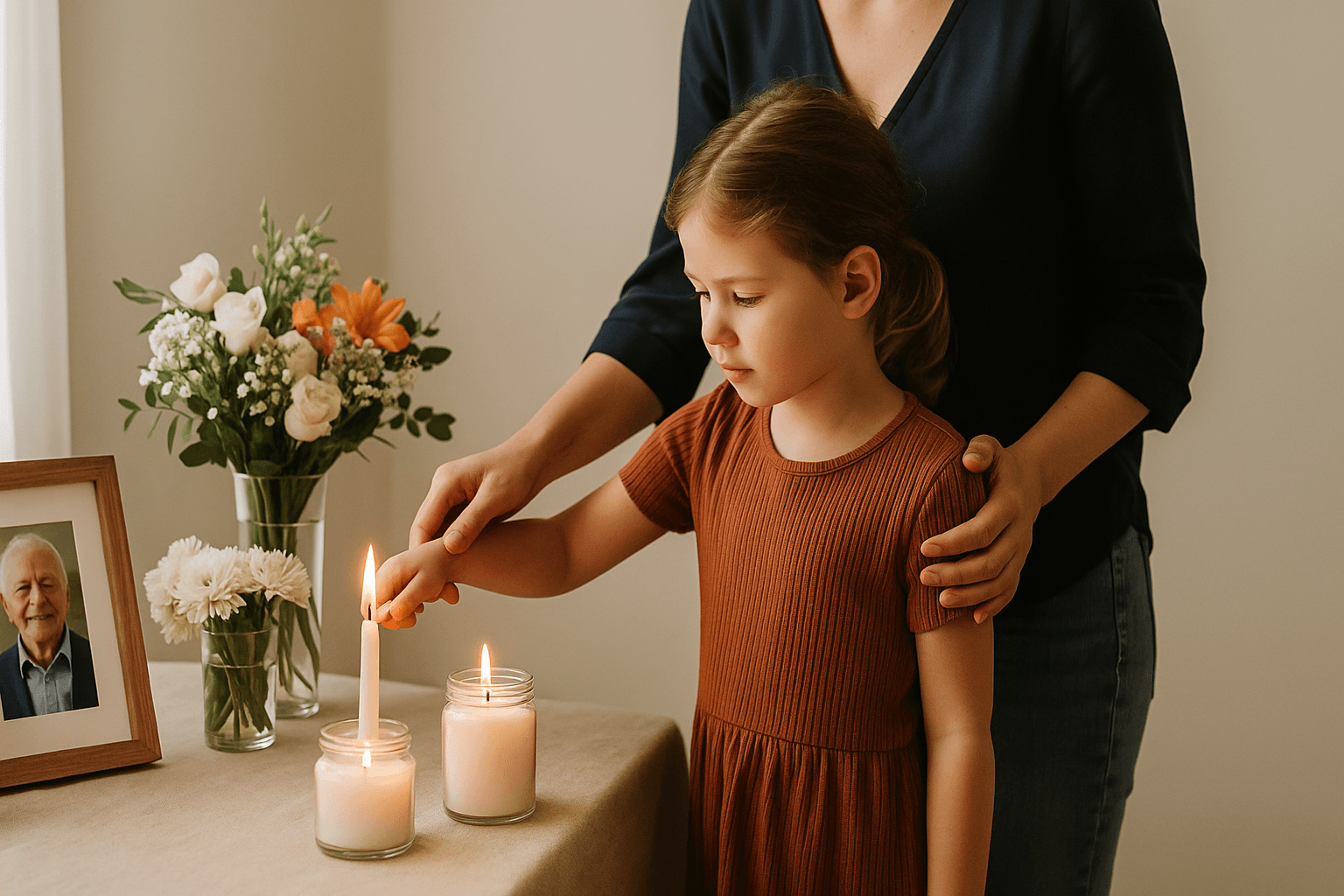
Guiding Young Hearts Through Goodbye
Loss is difficult for anyone — but for children and grandchildren, it can be especially confusing.
They may not fully understand what’s happening, yet they feel the shift, the silence, the absence.
How we guide them through a farewell — whether it’s a funeral, celebration of life, or quiet moment at home — shapes how they learn about love, memory, and healing.
With honesty, comfort, and inclusion, even the youngest mourners can find peace and connection in saying goodbye.
Start with Honest, Gentle Conversations
Children sense when something serious is happening. Using simple, clear, and truthful language helps them feel safe and respected.
Tips for Age-Appropriate Conversations:
Young children (under 6): Use concrete words. Instead of “passed away,” say, “Grandpa died, which means his body stopped working, and he can’t come back.”
School-age (6–12): Encourage questions. Explain what they might see at the service and that it’s okay to feel sad or confused.
Teens: Involve them directly. They may appreciate being trusted with choices or tasks that honor the loved one.
Avoid euphemisms like “gone to sleep” — these can cause confusion or fear. Clarity paired with warmth builds trust and understanding.
Involve Children in the Memorial Process
Including children in celebrations of life helps them feel part of the family’s story rather than spectators to loss.
Ways to Involve Them:
Create artwork or letters to place near the memorial display.
Choose a song, flower, or reading that reminds them of the loved one.
Help light candles or release balloons or bubbles.
Carry or place a symbolic item — a photo, toy, or flower — during the ceremony.
Decorate memory cards or stones with drawings or messages.
When children contribute, they see that their emotions and memories matter — and that love continues through their actions.
Create Safe Spaces for Expression
Children grieve differently than adults. Their sadness may appear in bursts — through questions, drawings, or play.
Ways to Support Expression:
Offer journals or coloring pages where they can draw or write memories.
Create a “memory box” with photos, letters, or keepsakes they can look at when missing the person.
Read books about loss that use age-appropriate storytelling to open discussion.
Encourage them to share stories — even funny ones — about their loved one.
Grief for children often comes and goes like waves. The goal isn’t to “fix” their sadness, but to make sure they never feel alone in it.
Address Common Fears and Misunderstandings
Children often interpret death through imagination — sometimes assuming they caused it or that it could happen to them next.
To Reassure Them:
Emphasize that nothing they did or said caused the loss.
Explain that most people die when they are very old or very sick, and that everyone around them is safe right now.
Remind them that it’s okay to laugh, play, and feel happy again.
This reassurance helps transform fear into trust and comfort.
Keep Rituals Child-Friendly
Even somber ceremonies can include child-friendly moments of connection.
Ideas to Add to a Service:
A children’s corner with art supplies or storybooks.
A memory garden activity where kids help plant flowers or trees.
Butterfly, lantern, or bubble releases to symbolize love continuing.
Interactive storytelling — where kids and adults share happy memories together.
The goal isn’t to shield them entirely — it’s to give them ways to participate safely and meaningfully.
Continue the Conversation After the Service
After the memorial, children often need time to process what happened. Their understanding grows as they age, and so should the conversation.
Ways to Support Ongoing Healing:
Visit the resting place or memorial site together.
Keep the loved one’s name present in family conversations.
Celebrate birthdays, anniversaries, or holidays with small rituals of remembrance.
Encourage open dialogue: “Do you ever think about Grandma?” or “What’s your favorite memory of Dad?”
Grief evolves, and children need reassurance that remembering is both healthy and beautiful.
When to Seek Additional Support
If a child becomes withdrawn, anxious, or overly fearful for an extended time, professional grief counseling can help.
Look for specialists in child bereavement or family therapy, or connect with local grief groups that include activities for younger participants.
Support from outside the family can provide language, validation, and tools for emotional resilience.
The Gift of Inclusion and Love
Children and grandchildren teach us something vital about grief: that love and memory are timeless.
By guiding them with honesty, patience, and warmth, we help them carry that love forward in healthy, hopeful ways.
At Honoring Lifetimes, we believe every farewell can also be a moment of learning — a reminder that love endures across generations.
Through open hearts and gentle hands, we can help young mourners understand that saying goodbye is just another way of saying, “I will always love you.”
You might also like

From Funerals to Celebrations: The Shift Toward Positivity in Grieving
From Funerals to Celebrations: The Shift Toward Positivity in Grieving
The way we approac
Read More
Why More Families Are Choosing Celebrations of Life Over Traditional Funerals
Why More Families Are Choosing Celebrations of Life Over Traditional Funerals
In recent y
Read More
Celebrations of Life in Wine Country: Beauty, Meaning and Setting
Celebrations of Life in Wine Country: Beauty, Meaning and Setting
There are few places mo
Read More