
How to Coordinate Visuals for a Celebration of Life
Learn how to coordinate visuals for a Celebration of Life with heartfelt photos, meaningful displays, color, lighting, and slideshow ideas that beautifully honor your loved one.
How to Coordinate Visuals for a Celebration of Life
1. Begin with the Emotional Theme
Before choosing any photos, slideshows, or décor, decide on the feeling you want to convey.
Ask yourself:
Should it feel peaceful and reflective?
Joyful and full of color?
Artistic and expressive?
Nature-centered and simple?
Once the emotional tone is clear, everything else—from colors to imagery—falls naturally into place.
Example: For someone who loved gardening, choose soft greens, floral arrangements, and nature photography. For a musician, use stage lighting, instrument displays, and recordings that complement photos.
2. Create a Visual Timeline
Select 50–100 photographs that trace the person’s life story — from childhood to their most recent years.
Mix candid photos with formal portraits.
Include milestones: travels, friends, holidays, work, and pets.
If possible, arrange them chronologically to show growth and joy through the decades.
You can display them in multiple ways:
Printed and framed along an entry table or memory wall.
Projected as a slideshow during music or storytelling.
Compiled into a video tribute set to meaningful songs.
If you have limited images, blend in visuals that represent what they loved — ocean waves, sunrises, vintage cars, or artwork they created.
3. Set the Tone with Color and Light
Color speaks to emotion. Choose a palette that represents your loved one.
Soft neutrals and whites evoke serenity.
Warm golds and earth tones feel grounded and natural.
Pastel pinks or blues can create an atmosphere of love and peace.
Vibrant colors bring energy and joy for someone who lived boldly.
Lighting also matters:
Use natural daylight whenever possible.
For indoor settings, use warm, indirect light—candles, lanterns, or small table lamps instead of harsh overhead lighting.
Candlelight during music or reflection adds a sense of sacredness.
4. Coordinate the Slideshow or Video Tribute
This is the heart of many Celebration of Life services.
Tips for coordination:
Limit slideshows to 5–7 minutes; longer can feel exhausting.
Pair photos with 2–3 songs that match different eras of the person’s life.
Begin with childhood and youth, move through adulthood, and end with photos that show peace, family, or legacy.
Add short captions or quotes between sections for emotional pacing.
If you’re projecting, test it beforehand to ensure correct lighting and sound. Always have someone assigned to start and stop it gracefully during the service.
5. Use Focal Displays or Memory Stations
Create one or two physical displays where guests can gather.
Examples:
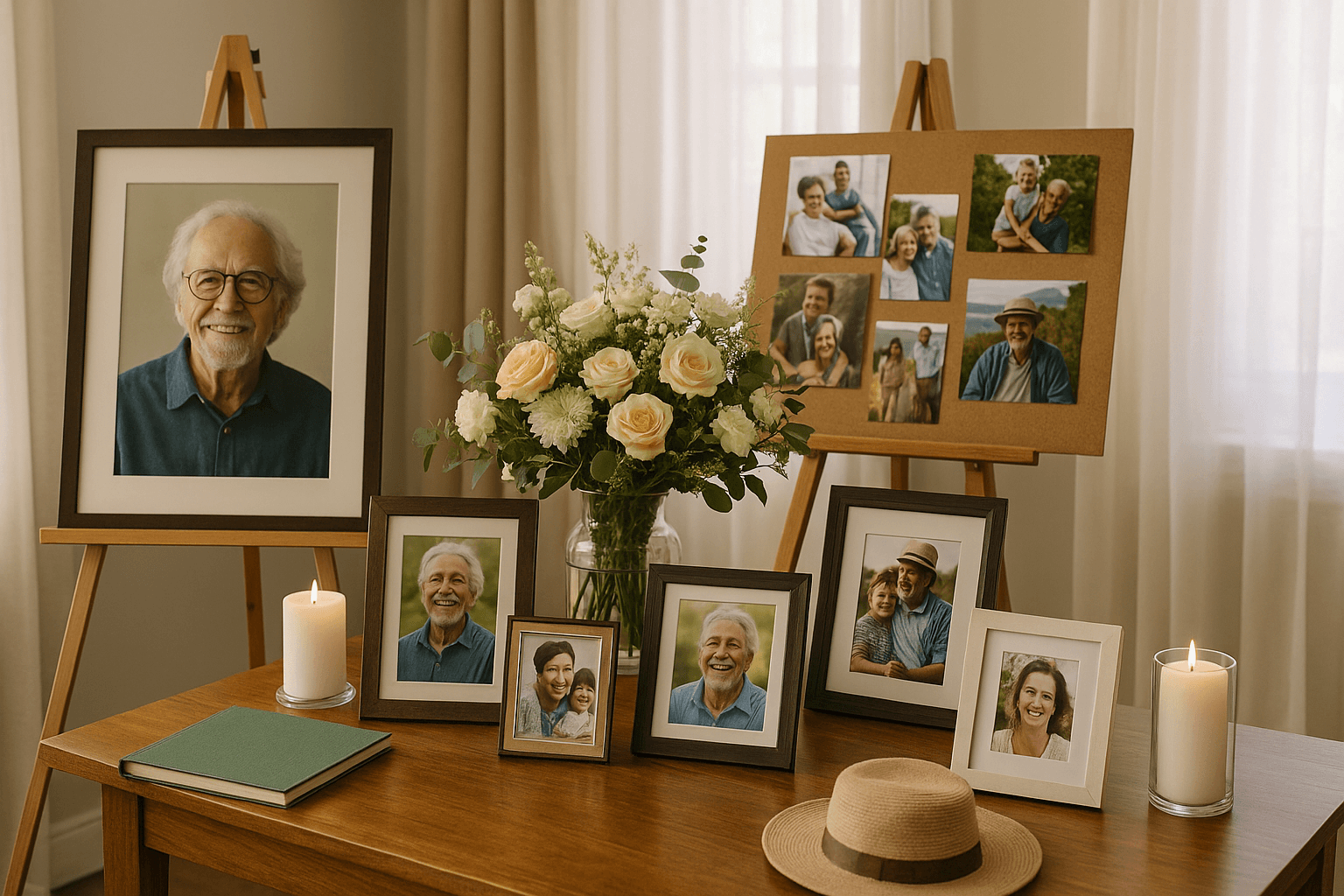
Memory Table: A central table with framed photos, favorite books, mementos, candles, and flowers.
Memory Wall: Corkboard or easel where guests can pin photos, notes, or prayers.
Hobby Corner: Display gardening tools, hiking boots, artwork, or other personal items that tell their story.
Quote Board: Print favorite sayings, scriptures, or affirmations in beautiful fonts and frame them around the room.
These visual anchors give people something tangible to connect with — it becomes storytelling without words.
6. Incorporate Nature and Symbolism
Many families include living elements as part of the visuals:
Flowers that reflect their favorite colors or blooms.
Butterflies or birds as motifs for freedom and transformation.
Water or stones as symbols of peace and grounding.
Trees or plants that guests can take home or plant in memory.
These natural visuals provide continuity between life, loss, and renewal.
7. Match the Venue’s Atmosphere
Whether held in a funeral home, vineyard, park, or private home, adapt visuals to the setting.
Use easels, draped fabric, or digital displays for formal indoor venues.
Use wooden tables, string lights, and flowers for outdoor spaces.
Keep signage discreet — let the visuals of life tell the story.
8. Involve Loved Ones in the Creation
Invite friends and family to contribute photographs, artwork, or favorite memories.
Ask one person to coordinate photo collection.
Another can design the slideshow or photo board.
A friend with design skills can assist with printing and layout.
Involvement deepens the meaning and relieves the family from doing everything alone.
9. Coordinate with the Officiant or Celebrant
Work closely with the celebrant (like you, Blane) to time the visuals so they blend seamlessly with words, music, and rituals.
For example:
Begin with a single portrait on screen as guests enter.
Play the slideshow during reflective music.
Return to a closing image or quote as the ceremony ends.
Everything should flow with rhythm and reverence.
10. End with a Signature Image or Moment
The final image people see or the last visual scene they experience often lingers longest.
Consider closing with:
A smiling photo of your loved one.
A sunset or landscape they loved.
A simple message like “Forever in our hearts.”
Follow it with a few moments of quiet, or soft instrumental music. Let the stillness speak.
The visuals of a Celebration of Life aren’t about decoration — they’re about storytelling. They express what words cannot. When coordinated thoughtfully, they wrap the entire service in a visual embrace of remembrance, love, and gratitude.
You might also like
From Funerals to Celebrations: The Shift Toward Positivity in Grieving
From Funerals to Celebrations: The Shift Toward Positivity in Grieving
The way we approac
Read More
Why More Families Are Choosing Celebrations of Life Over Traditional Funerals
Why More Families Are Choosing Celebrations of Life Over Traditional Funerals
In recent y
Read More
Celebrations of Life in Wine Country: Beauty, Meaning and Setting
Celebrations of Life in Wine Country: Beauty, Meaning and Setting
There are few places mo
Read More