
International Farewells: When Loved Ones Are from Mixed Nationalities or Abroad
Learn how to plan meaningful international and multicultural farewells. Discover ways to honor diverse traditions, coordinate global families, and celebrate love beyond borders.
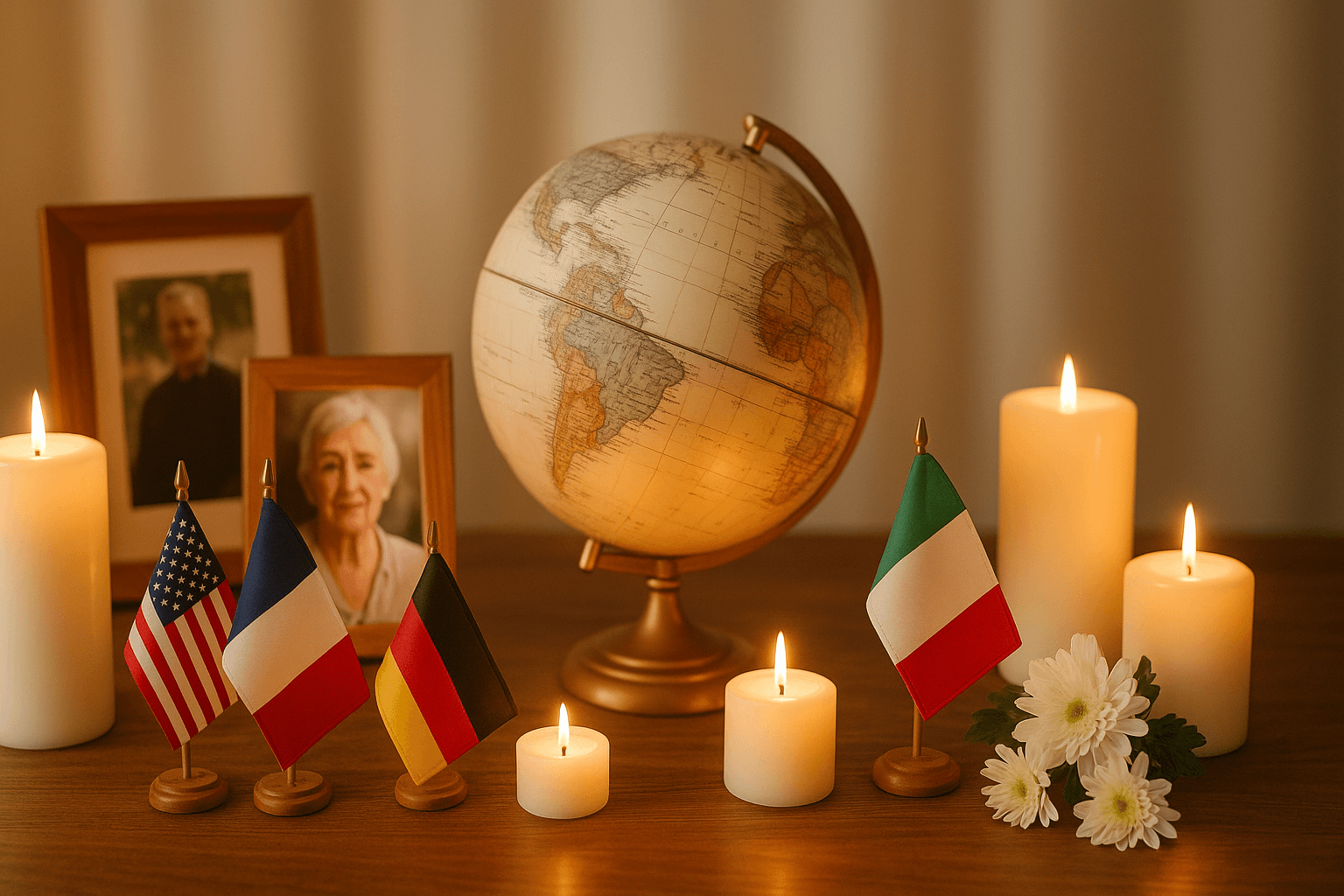
When Love and Legacy Cross Borders
In today’s interconnected world, families often span continents, cultures, and faiths.
When loss touches such a family, planning a farewell becomes both a challenge and a profound opportunity — a way to honor love that transcends geography and traditions that blend beautifully across borders.
International or multicultural farewells invite us to reflect on one universal truth: grief and love are languages everyone understands.
Understanding the Complexities of Global Farewells
When a loved one passes away abroad or comes from a different country, there are both logistical and emotional layers to navigate.
Families must consider time zones, travel, traditions, and often legal procedures — all while processing deep grief.
Common Considerations Include:
Repatriation (transporting remains internationally).
Visa or travel arrangements for relatives attending from other countries.
Language and cultural customs that influence the ceremony.
Coordination between international funeral homes or embassies.
While it can feel overwhelming, with careful planning and compassionate guidance, these farewells often become some of the most meaningful and memorable.
The Process of Repatriation
Repatriation — returning a loved one’s body or ashes to their homeland — can feel daunting, but it’s a well-established process when handled by professionals.
Steps Typically Include:
Contacting a funeral home experienced in international arrangements.
Working with your country’s embassy or consulate to ensure proper documentation.
Obtaining a death certificate and translation if required.
Securing permits for transport (human remains or ashes).
Coordinating arrival with a receiving funeral director abroad.
Tip: Many families choose to hold two ceremonies — one locally for immediate loved ones, and another abroad where extended family can gather. This approach allows everyone to participate meaningfully, regardless of location.
Blending Traditions with Respect
When families come from different cultural or religious backgrounds, blending customs can create a ceremony that feels both unified and inclusive.
Ways to Honor Multiple Traditions:
Incorporate readings or prayers from each faith or culture.
Display flags, symbols, or artifacts representing each heritage.
Combine music, attire, or colors from both sides of the family.
Use bilingual programs or interpreters to help everyone participate.
Offer traditional foods or drinks from both cultures at the reception.
The goal isn’t to merge customs perfectly — it’s to celebrate the diversity that shaped your loved one’s life.
Virtual Participation for Global Families
When distance prevents travel, technology helps bridge the gap.
Live streaming, virtual gatherings, and shared digital spaces allow families and friends around the world to unite in remembrance.
Helpful Ideas:
Host a live-streamed service or create a virtual memorial page for messages and photos.
Encourage attendees to light candles simultaneously from their own homes.
Use time-zone-friendly scheduling or record the ceremony for later viewing.
Follow up with a digital keepsake video or slideshow to share internationally.
Grief shared across screens still carries love — connection transcends distance.
Symbolic Gestures with Global Meaning
Small symbolic acts can tie together family members separated by oceans.
Examples:
Candle-lighting ceremonies where participants across countries light candles at the same hour.
Tree planting in different locations to create a “global garden of remembrance.”
Joint donations to an international cause or charity the loved one cared about.
Coordinated release rituals — doves, petals, or lanterns — held in multiple locations.
These gestures remind us that remembrance knows no borders.
Handling Cultural and Legal Differences Gracefully
Different countries have varying laws regarding funerals, ashes, and memorial practices.
Being aware of these nuances helps ensure a respectful and smooth process.
For Example:
Some countries require ashes to remain sealed during transport.
Certain religions prohibit cremation or dictate burial timing.
Legal documents may need translation or notarization for use abroad.
Funeral directors and embassies can guide families through these steps with care and confidentiality.
Continuing Connection Across Continents
Even after services conclude, many families continue remembrance globally.
Online memorials, anniversary rituals, and family storytelling sessions can keep love and legacy alive across generations and time zones.
Ongoing Remembrance Ideas:
Create a shared digital photo archive or video library.
Host an annual remembrance video call.
Share recipes, stories, or songs that represent your loved one’s multicultural life.
Visit their homeland or special places they loved, when ready.
In doing so, the family’s connection evolves — not bound by geography, but strengthened by shared remembrance.
Love Without Borders
At Honoring Lifetimes, we believe farewell is never final — especially when love spans nations and traditions.
Every culture has its own way of saying goodbye, but the message remains the same: You are remembered. You are loved.
Through blended rituals, international cooperation, and heartfelt creativity, families can create farewells that truly reflect the beauty of a global life — one lived and loved across many worlds.
You might also like
From Funerals to Celebrations: The Shift Toward Positivity in Grieving
From Funerals to Celebrations: The Shift Toward Positivity in Grieving
The way we approac
Read More
Why More Families Are Choosing Celebrations of Life Over Traditional Funerals
Why More Families Are Choosing Celebrations of Life Over Traditional Funerals
In recent y
Read More
Celebrations of Life in Wine Country: Beauty, Meaning and Setting
Celebrations of Life in Wine Country: Beauty, Meaning and Setting
There are few places mo
Read More