
Navigating Social Media After Loss: Online Memorials, Grief Posts & Privacy Considerations
Learn how to navigate social media after loss. Discover how to share grief posts, create online memorials, and manage privacy with compassion and care.
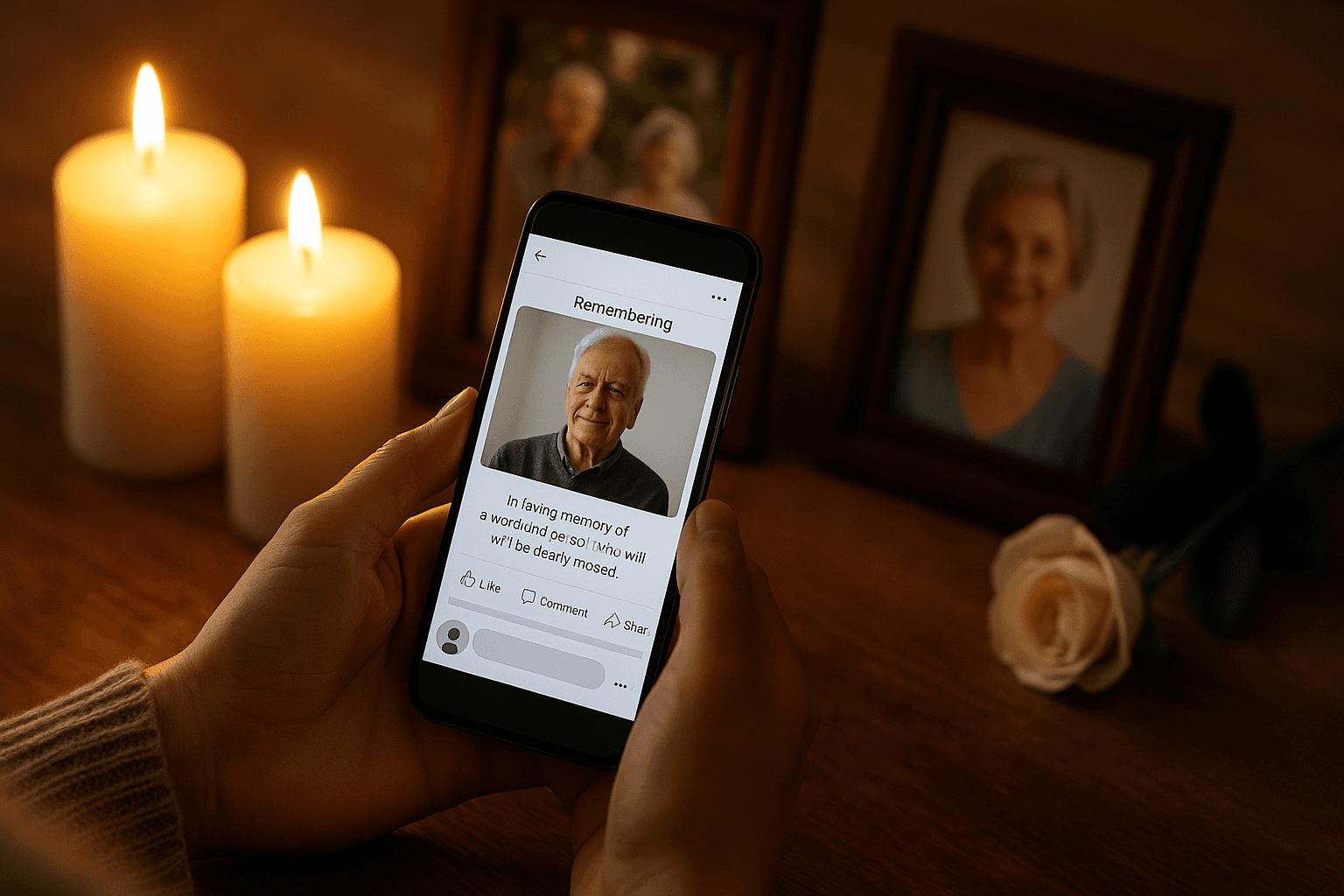
The New Landscape of Grief
In today’s world, mourning often unfolds not only in quiet rooms or community gatherings but also online.
Social media has become a space where families, friends, and entire communities share memories, express sorrow, and find connection after loss.
Yet, navigating grief online can be complex. Between heartfelt posts, privacy settings, and digital memorials, families must balance openness with respect, visibility with sensitivity.
Handled thoughtfully, social media can be a powerful extension of remembrance — a way to keep love visible and stories alive.
The Role of Social Media in Modern Grieving
Social platforms like Facebook, Instagram, TikTok, and X (Twitter) have evolved into virtual gathering spaces for memorialization.
Posts of remembrance, shared photos, and comment threads of condolences can offer enormous comfort — especially to those separated by distance.
Benefits of Online Grieving Spaces:
Allow friends and extended family to express support quickly.
Provide long-term access to memories, stories, and photos.
Help normalize conversations about grief and healing.
Create a lasting record of a loved one’s life and impact.
Social media, when used gently, becomes a bridge — connecting hearts across time and geography.
Creating an Online Memorial Page
Many families choose to create dedicated online memorial pages to celebrate their loved one’s life.
These pages serve as digital archives where friends can share tributes, post photos, or leave messages of remembrance.
Popular Options Include:
Facebook Memorialization: Facebook allows a profile to be converted into a memorial account where others can visit, post, and share.
Dedicated Websites: Platforms like Ever Loved, GatheringUs, or Keeper offer interactive memorial websites.
Private Family Pages or Groups: For those seeking more privacy, creating a closed Facebook group or private website ensures only invited guests participate.
When building an online memorial, think of it as a living tribute — one that grows with each shared memory.
Posting About Loss on Your Own Account
When grief feels overwhelming, posting online can serve as a release — a way to process feelings and invite comfort.
However, it’s natural to wonder how much to share or when to share it.
Tips for Thoughtful Posting:
Wait until you’re ready. There’s no “right” time to post.
Use authentic language. Speak from the heart; perfection isn’t required.
Set boundaries. If you don’t want comments or messages, say so gently.
Be mindful of others’ grief. Check that family and close friends have been informed before posting publicly.
Whether your post is a single photo, a long reflection, or a simple “I miss you,” it can become a touchstone of shared remembrance.
Managing Privacy and Boundaries
Social media can blur lines between public and private grief.
To protect yourself and your family, consider these privacy-conscious choices:
Adjust visibility: Decide whether your posts should be public, friends-only, or private.
Coordinate with family: Agree on what’s appropriate to share — photos, cause of death, or service details.
Limit tagging: Prevent unwanted posts or images from being associated with the memorial.
Use content filters: Mute or limit posts that may be emotionally triggering.
Remember — the purpose of sharing isn’t exposure; it’s expression.
Honoring Loved Ones Digitally, Mindfully
Social media remembrance doesn’t have to end after the initial post. Many families find comfort in continuing digital traditions.
Meaningful Ideas Include:
Posting on birthdays or anniversaries with new reflections.
Sharing “On This Day” memories when they appear.
Uploading favorite photos others haven’t seen before.
Highlighting your loved one’s causes, charities, or passions.
Creating reels or slideshows that celebrate their life story.
These small digital rituals ensure that memory remains present — not frozen in time, but living through connection.
Balancing Connection with Emotional Health
While online spaces can bring comfort, they can also intensify grief if overused.
Scrolling through old photos or constant reminders may feel heavy at times.
Strategies for Healthy Engagement:
Set limits on when and how long you spend revisiting memorial pages.
Avoid comparing your grieving process to others online.
Take breaks when needed — grief offline is just as valid.
Seek private comfort: journaling, nature walks, or talking to a counselor.
Social media should support your healing, not replace it.
Supporting Others Online
If you’re a friend or relative responding to someone else’s loss post:
Keep comments kind, brief, and personal.
Avoid offering unsolicited advice or theological statements.
Use phrases like “I’m thinking of you,” “Your post moved me deeply,” or “Thank you for sharing their memory.”
Your words, even a few, can mean the world in someone’s most vulnerable moment.
A Digital Legacy That Endures
Grief in the digital age is complex — but it also gives us something extraordinary: the ability to preserve and share love endlessly.
At Honoring Lifetimes, we believe online memorials, when approached with sensitivity, can extend remembrance far beyond time or place.
Through thoughtful sharing, mindful privacy, and community care, social media can become a landscape of healing — where every post is a gentle reminder that love leaves a lasting footprint, even in pixels.
You might also like
From Funerals to Celebrations: The Shift Toward Positivity in Grieving
From Funerals to Celebrations: The Shift Toward Positivity in Grieving
The way we approac
Read More
Why More Families Are Choosing Celebrations of Life Over Traditional Funerals
Why More Families Are Choosing Celebrations of Life Over Traditional Funerals
In recent y
Read More
Celebrations of Life in Wine Country: Beauty, Meaning and Setting
Celebrations of Life in Wine Country: Beauty, Meaning and Setting
There are few places mo
Read More