
The Empty House: How Spaces Hold Energy After Death
Explore how homes and rooms hold emotional energy after loss. Learn how to navigate the emptiness, honor memory within space, and find healing in what remains.
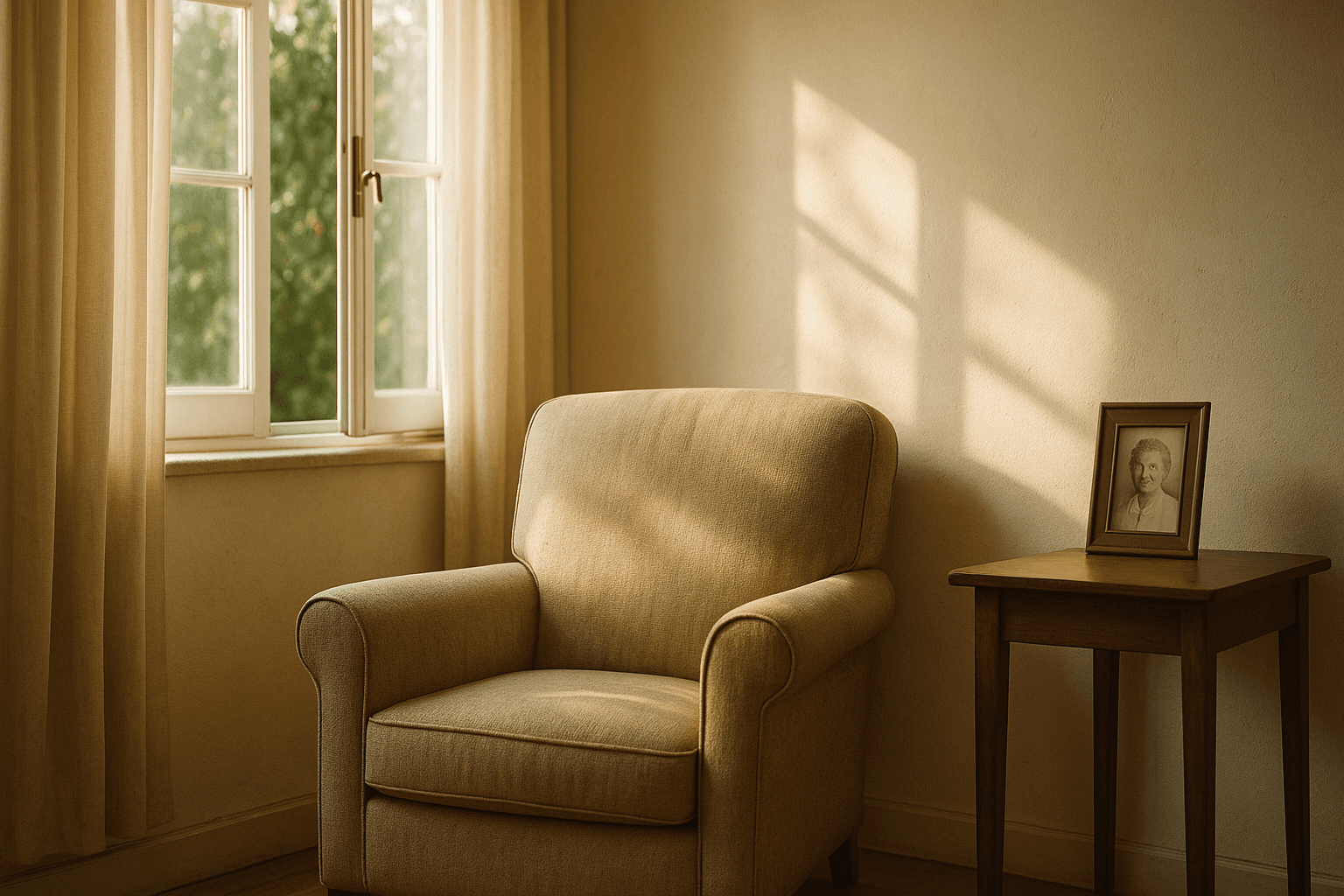
The Silence That Fills the Room
When a loved one passes, the silence that follows can feel louder than sound.
Rooms that once carried conversation, laughter, or familiar footsteps suddenly seem to hum with absence.
And yet, if you stand quietly long enough, you may sense something else — a subtle energy, a memory that lingers in the air.
Homes, like people, carry stories. Every wall, every object, every worn spot on the floor remembers. When loss enters that space, the home itself becomes a living archive — a vessel holding both the presence and the absence of love.
Why Spaces Hold Emotional Energy
Psychologists and spiritual traditions alike recognize that environments absorb emotion.
The energy of daily life — joy, tension, care, and routine — imprints itself in the atmosphere.
After death, that energy doesn’t vanish. It lingers in subtle ways: the stillness of a bedroom, the smell of a favorite meal, the light that falls across the same corner every afternoon.
These sensations are not illusions. They’re the brain’s way of processing emotional continuity — the truth that love and memory don’t evaporate when the person does.
What remains is the feeling of connection, suspended in space.
The Threshold Between Memory and Reality
Returning to a loved one’s home — or even their favorite chair — can be overwhelming.
It’s not just what we see that moves us, but what we feel.
The empty house can seem to breathe in rhythm with memory, inviting both comfort and pain.
You might find yourself expecting them to walk through the door or hear their voice from another room. This isn’t denial — it’s the mind adjusting to absence in a space where presence once ruled.
Grief is spatial. It exists not only in the heart but in the architecture around us.
The Home as a Mirror of Love
Every home tells a story. After loss, that story shifts from living narrative to sacred history.
A home becomes a museum of belonging — filled with evidence of laughter, care, and routine.
The photos on the wall, the books left open, the dishes stacked in the cupboard — they’re all quiet witnesses to a life that mattered.
For many, leaving a home untouched is a form of preservation. It allows love to linger safely within familiar walls until the heart feels ready to move forward.
For others, transformation brings peace — opening windows, rearranging furniture, or creating an altar of remembrance in a shared space.
Both paths are valid. Healing can mean keeping things still or inviting change. What matters most is that you honor the emotion the space holds.
The Power of Energy and Ritual
In many traditions, cleansing or blessing a home after death is not about erasing the person’s presence — it’s about creating harmony for those who remain.
Lighting candles, burning sage, playing soft music, or simply opening windows can shift the emotional atmosphere.
Each ritual helps transition the home from a place of sorrow to one of remembrance.
It transforms energy from heavy to peaceful, allowing the house to breathe again.
Even small gestures — such as placing flowers in a favorite vase or saying their name aloud in gratitude — can bring balance and warmth back into the room.
When Emptiness Holds Grace
The empty spaces left behind are not just voids — they are invitations.
They ask us to pause, to remember, to feel.
An empty chair may seem unbearable at first, but over time, it becomes a quiet reminder of how deeply we loved.
Grief transforms how we see space. What once felt ordinary becomes sacred: the kitchen where conversations happened, the garden where laughter bloomed, the hallway where hugs were exchanged.
Emptiness, when met with tenderness, becomes a container for meaning.
Transforming the Space Without Losing the Spirit
When you’re ready, you can reshape the space without losing the connection.
Turn their reading nook into a reflection corner.
Transform their room into a creative space or quiet retreat.
Display a few meaningful items — their hat on a hook, their photo near sunlight — as symbolic bridges between past and present.
The goal isn’t to remove their energy; it’s to integrate it into your ongoing life.
In doing so, the home stops being a shrine to loss and becomes a living testament to love.
A House That Still Holds Love
At Honoring Lifetimes, we believe the spaces we inhabit after loss are part of the healing journey.
A house is more than walls and furniture — it’s an emotional ecosystem built from shared moments, care, and presence.
Even when the person is gone, their essence remains woven into the space they once filled.
And as you move through the rooms — dusting shelves, lighting candles, breathing through the silence — you carry that essence forward.
“A house doesn’t stop being a home when someone leaves it. It simply learns a quieter way to love.”
You might also like

From Funerals to Celebrations: The Shift Toward Positivity in Grieving
From Funerals to Celebrations: The Shift Toward Positivity in Grieving
The way we approac
Read More
Why More Families Are Choosing Celebrations of Life Over Traditional Funerals
Why More Families Are Choosing Celebrations of Life Over Traditional Funerals
In recent y
Read More
Celebrations of Life in Wine Country: Beauty, Meaning and Setting
Celebrations of Life in Wine Country: Beauty, Meaning and Setting
There are few places mo
Read More