
The Language of Flowers: Symbolism and Meaning in Funeral Arrangements
Discover the symbolism behind funeral flowers. Learn how blooms like lilies, roses, and forget-me-nots express love, remembrance, and peace in celebration of life services.
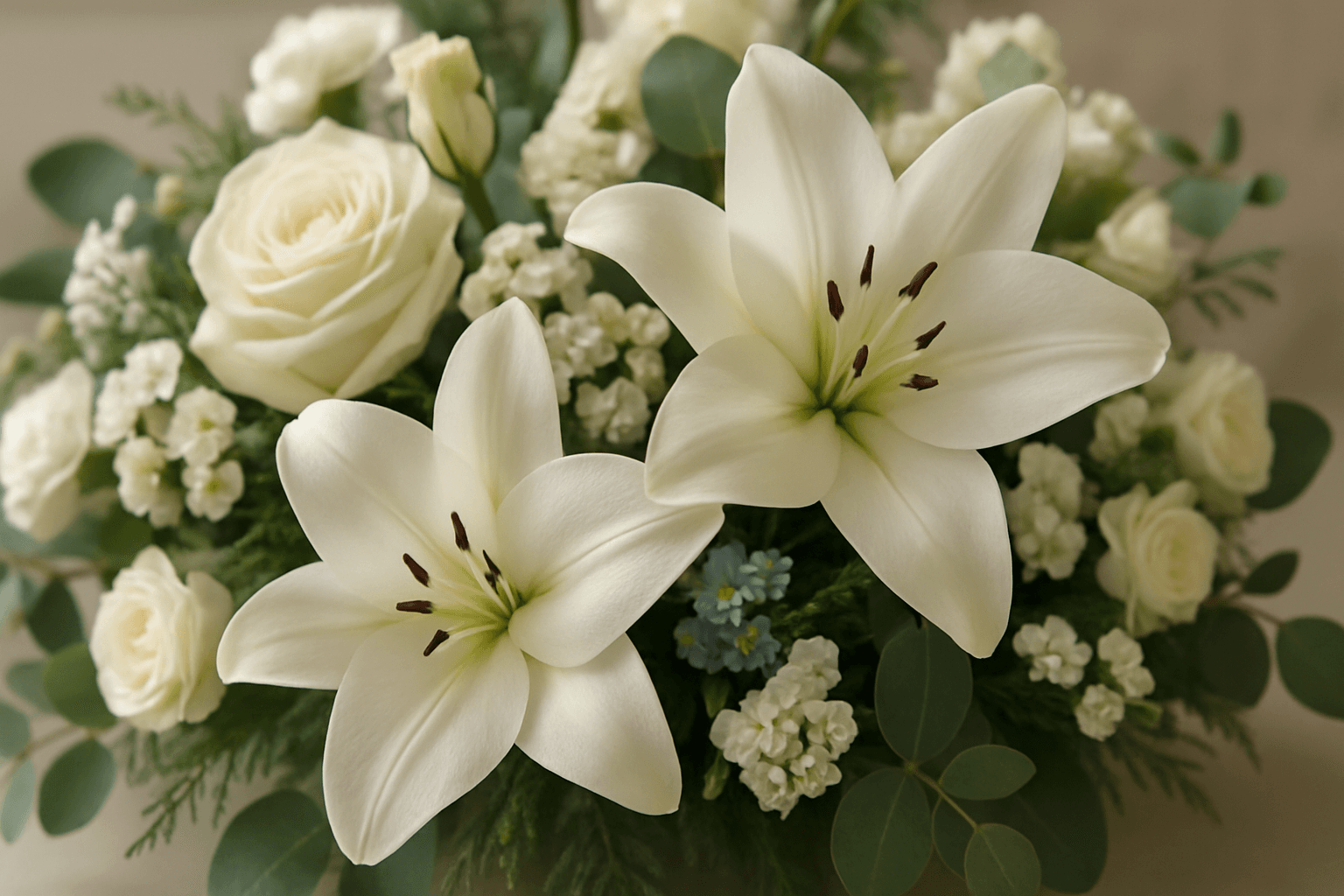
When Words Fall Short, Flowers Speak
In moments of loss, language often fails us — yet flowers never do.
Their colors, shapes, and scents express what hearts cannot easily say. They stand in quiet beauty beside the grieving, whispering messages of comfort, memory, and eternal love.
Across centuries and cultures, flowers have carried meaning. Each bloom tells a story — of farewell, faith, affection, or renewal. And in funeral and celebration of life ceremonies, these stories blend into a language of their own: one of grace, compassion, and remembrance.
The Timeless Symbolism of Lilies
Few flowers are more closely associated with funerals than lilies.
Their soft white petals and gentle fragrance have long symbolized purity, peace, and the soul’s return to innocence.
In Christian traditions, lilies represent the restored innocence of the departed spirit. White lilies — particularly Madonna lilies — are often chosen for their association with renewal and hope. Stargazer lilies, with their vibrant pink tones, add an element of celebration, symbolizing a life beautifully lived.
The lily’s open bloom mirrors the idea of spiritual awakening — a soul unfolding into eternity.
Roses: The Many Colors of Love and Farewell
Roses, universally recognized as symbols of love, carry layered meanings depending on their color.
Red roses convey deep respect and enduring love. White roses represent purity and reverence. Yellow speaks of friendship and gratitude, while pink expresses admiration and appreciation.
Placed within a funeral arrangement, a single rose often carries the message: “You are remembered.”
A bouquet of roses, meanwhile, tells a story — each hue blending emotion into a chorus of affection and remembrance.
No matter the shade, roses remind us that love remains, even when life has changed.
Carnations and the Comfort of Enduring Love
Carnations, with their soft ruffled petals, are often seen as symbols of lasting devotion.
In Christian legend, carnations are said to have first bloomed from the tears of the Virgin Mary — making them a sign of motherly love and remembrance.
White carnations represent pure love and innocence, while pink carnations symbolize gratitude and remembrance. Red carnations express admiration and affection that transcends time.
Their long-lasting nature also makes them a fitting tribute to enduring love — the kind that survives loss.
Chrysanthemums: Honoring a Life Completed
In many cultures, chrysanthemums are associated exclusively with mourning — especially in Europe and Asia, where they are often placed on graves and used in memorial services.
In the U.S., however, they have a more uplifting meaning: celebration of life.
Their full, layered blooms represent completeness — a life well-lived and beautifully finished.
White chrysanthemums often symbolize truth and honesty, while yellow ones convey warmth, optimism, and friendship.
Each petal seems to say: “You mattered. You are remembered.”
Orchids: Eternal Love and Beauty
Elegant and timeless, orchids symbolize refined beauty and enduring love.
In sympathy arrangements, they are often chosen for their resilience — they live longer than most cut flowers, a quiet metaphor for everlasting affection.
White and pink orchids, particularly Phalaenopsis and Dendrobium varieties, are traditionally used to express sympathy and eternal remembrance.
Their delicate appearance hides remarkable strength, much like the human spirit in grief.
Forget-Me-Nots and Small Blooms with Deep Meaning
Not all flowers in a memorial arrangement need to be grand. Sometimes, the smallest blossoms speak the loudest.
Forget-me-nots, violets, and baby’s breath each carry messages of tenderness and memory.
Forget-me-nots symbolize remembrance and everlasting connection.
Violets evoke modesty and faithfulness.
Baby’s breath — often used as a filler — represents the innocence and purity of love that remains unchanged.
When woven together, these small flowers create a tapestry of subtle emotion — a whisper rather than a shout, but no less meaningful.
Creating a Personal Floral Language
Choosing flowers for a memorial or celebration of life is not about tradition alone — it’s about storytelling.
Each bloom can represent an aspect of the person being honored: their personality, their passions, or their journey.
A gardener might be remembered with wildflowers.
A traveler, with tropical blooms.
A quiet soul, with soft whites and greens.
A vibrant spirit, with bursts of color that mirror the joy they brought.
The beauty of this language is that it belongs to no one and speaks to everyone.
Flowers as a Living Tribute
At Honoring Lifetimes, we believe flowers remind us that beauty and love continue, even in sorrow.
They fade, yes — but in that fading, they teach us the cycle of renewal.
They bloom again each season, echoing the truth that life, too, transforms and returns in different forms.
Whether a single rose on a casket, a spray of lilies in a chapel, or a garden planted in someone’s honor, every petal carries meaning.
Each one says: You are remembered. You are loved.
“Flowers are the soul’s language — when words cannot carry love, they bloom.”
Suggested Image for End of Blog
You might also like

From Funerals to Celebrations: The Shift Toward Positivity in Grieving
From Funerals to Celebrations: The Shift Toward Positivity in Grieving
The way we approac
Read More
Why More Families Are Choosing Celebrations of Life Over Traditional Funerals
Why More Families Are Choosing Celebrations of Life Over Traditional Funerals
In recent y
Read More
Celebrations of Life in Wine Country: Beauty, Meaning and Setting
Celebrations of Life in Wine Country: Beauty, Meaning and Setting
There are few places mo
Read More