
What to Do with Keepsakes & Personal Effects After the Service
Learn how to lovingly sort, share, and preserve keepsakes after a memorial. Explore meaningful ways to honor a loved one’s belongings with care, purpose, and remembrance.
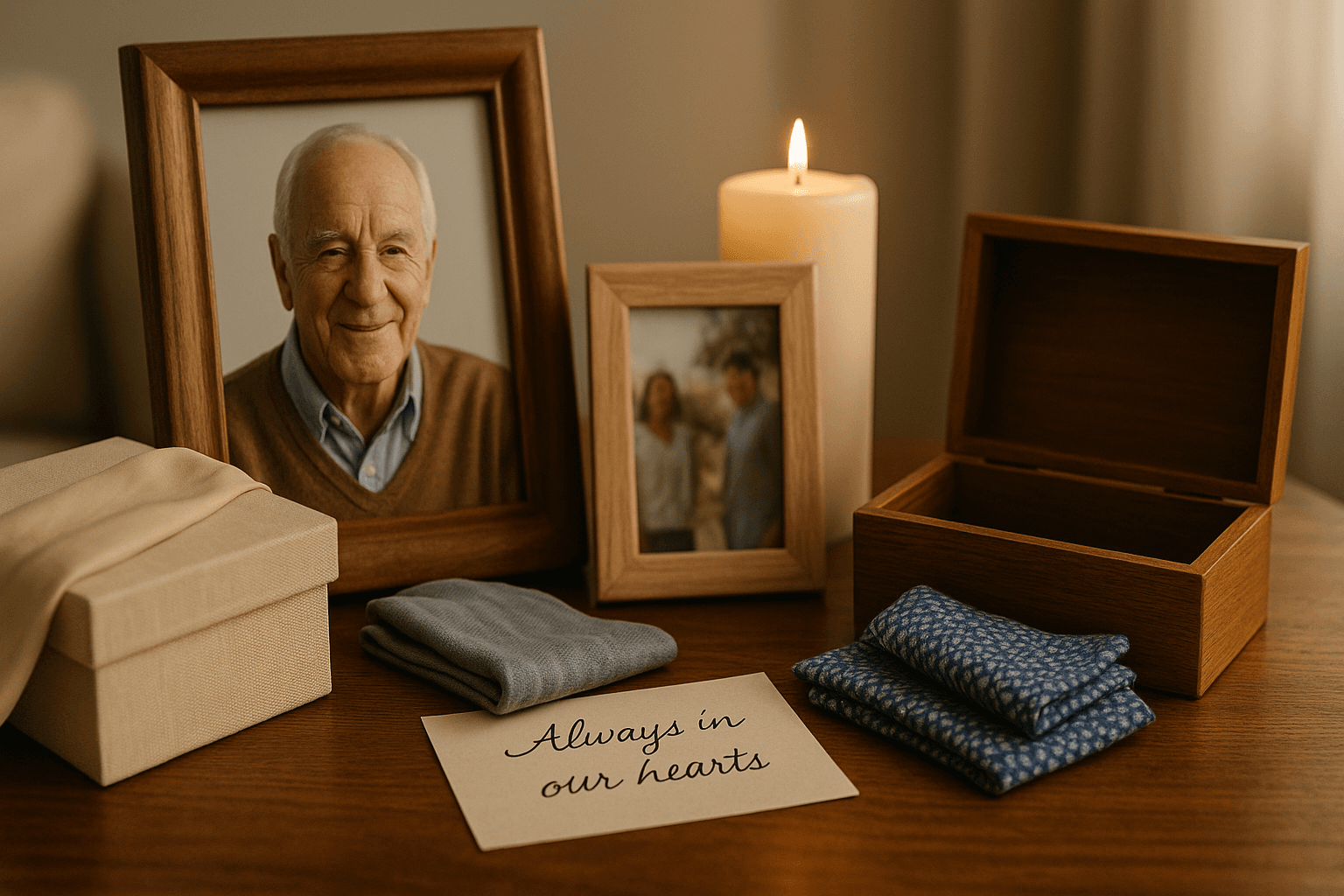
The Tender Work of Remembering
After the service ends and guests have gone home, families often face one of the most emotional parts of grief — deciding what to do with a loved one’s personal belongings.
Clothes still hold familiar scents. Drawers reveal forgotten notes. Each object seems to carry a story.
This process isn’t just about organization — it’s about healing through remembrance.
The goal isn’t to let go of everything or hold onto it all; it’s to find meaning and comfort in what remains.
Give Yourself Time and Permission to Wait
There’s no deadline for sorting through belongings.
In the days following a service, emotions are raw. Making decisions too soon can feel overwhelming or even regretful.
It’s okay to wait.
Start small — a single drawer or box.
Give yourself permission to pause when needed.
Focus on what feels right, not what feels rushed.
Grief is personal, and so is the timing of letting go or holding on.
Involve Family & Friends Thoughtfully
Sorting through belongings can become a shared act of remembrance.
Invite family or close friends to participate — not to divide possessions quickly, but to honor memories together.
How to Approach It:
Gather everyone for a “memory afternoon.”
Take turns sharing stories connected to items.
Decide together which things will be kept, shared, or donated.
Photograph special items before passing them along.
When done with care, this process becomes an extension of the celebration of life — a continuation of love through storytelling.
Create Keepsakes with Meaning
You don’t have to keep everything to keep your loved one close.
Transforming a few cherished items into personal keepsakes can bring comfort while reducing clutter.
Meaningful Ideas:
Memory Quilts: Turn favorite shirts, scarves, or fabrics into a patchwork of memories.
Photo Jewelry: Create lockets or charms engraved with their handwriting or photo.
Shadow Boxes: Combine photos, trinkets, and small objects in a framed display.
Repurposed Jewelry: Melt old rings or pendants into new pieces that can be shared among family.
Decorative Keepsake Boxes: Store letters, watches, or keepsakes in a beautiful container.
Each keepsake transforms grief into art — a way to carry their presence forward.
Sharing Items as Acts of Connection
Some families find healing in giving personal effects to others who shared a connection with their loved one.
Ways to Share Meaningfully:
Gift a friend a book, mug, or tool they once used together.
Donate hobby items (instruments, gardening tools, or art supplies) to local programs or schools.
Pass heirlooms to younger generations with written notes about their significance.
Send a small memento — like a tie, photo, or recipe — to friends who live far away.
Sharing items can feel like extending their love into the world, one thoughtful gesture at a time.
Honoring Everyday Items
Sometimes the smallest things — a keychain, a notebook, a favorite mug — hold the deepest meaning.
Rather than packing them away, find ways to keep them visible in daily life.
Ideas to Incorporate Them:
Display their favorite hat or framed recipe in your home.
Use a piece of their jewelry or watch during special occasions.
Keep a small item in your car or workspace as a quiet reminder.
Create a rotating memory shelf — a small space to highlight keepsakes throughout the year.
These touches turn remembrance into a living tribute woven naturally into your surroundings.
Donating with Purpose
Letting go doesn’t mean losing connection — it can mean extending kindness in your loved one’s name.
Purposeful Donation Ideas:
Give clothes to shelters or nonprofits that reflect their values.
Donate professional attire to job-assistance organizations.
Offer books to libraries or schools.
Gift mobility aids, medical equipment, or supplies to those in need.
Attach a small note or dedication card if desired: “In memory of [Name], who loved helping others.”
Even unseen, these acts ripple outward — continuing the compassion your loved one lived by.
Organizing What You Keep
Once you’ve chosen which items to hold onto, store them intentionally.
Create a dedicated “Legacy Space” in your home — whether it’s a single box, drawer, or shelf.
Tips for Organization:
Label boxes with short notes or photos for easy recall.
Use archival-safe containers for fragile or paper items.
Keep digital backups of letters, videos, or photos.
Rotate displayed items seasonally to refresh your connection.
Intentional organization helps balance remembrance with daily living.
Finding Peace in the Process
Sorting keepsakes is more than a task — it’s a ritual of healing.
You’ll laugh, cry, pause, and rediscover stories you’d forgotten.
At Honoring Lifetimes, we believe every object tells a story — and how you choose to carry those stories forward is a reflection of love itself.
There’s no single “right” way to handle belongings after a farewell. Whether you preserve, share, donate, or transform, each choice is an act of remembrance — one that keeps the essence of your loved one alive in heart, home, and spirit.
You might also like

From Funerals to Celebrations: The Shift Toward Positivity in Grieving
From Funerals to Celebrations: The Shift Toward Positivity in Grieving
The way we approac
Read More
Why More Families Are Choosing Celebrations of Life Over Traditional Funerals
Why More Families Are Choosing Celebrations of Life Over Traditional Funerals
In recent y
Read More
Celebrations of Life in Wine Country: Beauty, Meaning and Setting
Celebrations of Life in Wine Country: Beauty, Meaning and Setting
There are few places mo
Read More