
Why We Keep Their Things: The Psychology of Possessions and Memory
Explore why we hold onto a loved one’s belongings after loss. Discover the psychology of possessions, emotional attachment, and how to balance remembrance with healing.
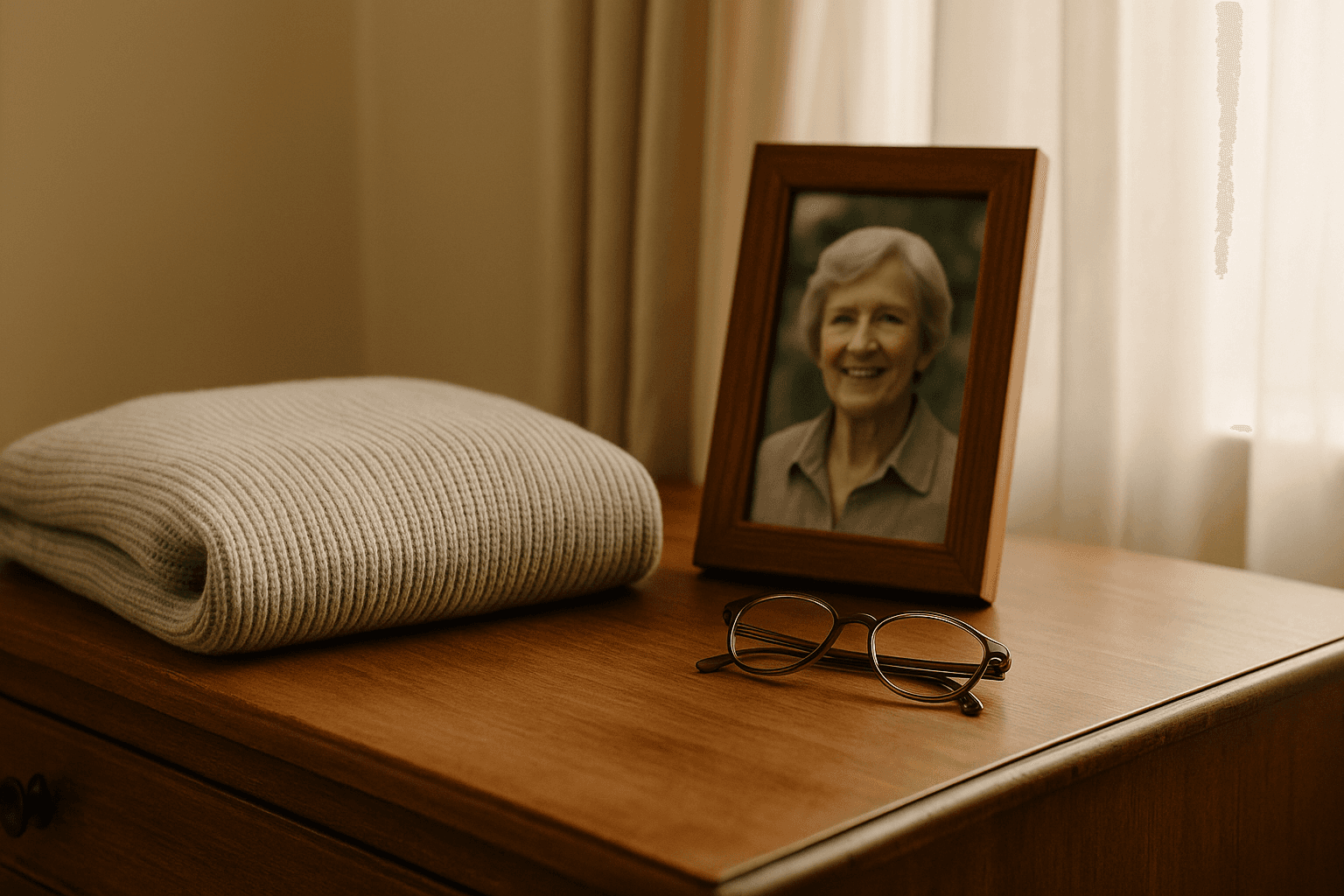
Objects as Extensions of Love
After a loss, the world feels quieter — but the things they left behind still seem to speak.
A sweater hanging on a chair, a watch on the nightstand, a book marked halfway through — each carries a trace of the person who once held it.
We keep these things not because we are unwilling to move on, but because they remind us that love still exists in form and texture. Their belongings hold their touch, their habits, their essence — pieces of a presence we can no longer physically reach.
In this way, possessions become more than material; they become anchors of memory.
The Psychology of Attachment to Belongings
Psychologists often describe the bond between people and objects as a form of “symbolic attachment.”
The human mind doesn’t just remember people through thought — it remembers them through sensation. Touching, smelling, or even seeing something familiar reawakens emotional memory.
When we hold their favorite mug, we don’t just see ceramic — we feel the mornings they filled it. When we open their closet, the scent of their clothes stirs something both painful and comforting.
The mind uses these sensory cues to keep connection alive. It’s not irrational — it’s love expressed through memory’s most tangible form.
Holding On vs. Holding Sacred
Many people worry that keeping too many things means they’re “stuck” in grief. But in truth, what we keep and why matters far more than how much.
There’s a difference between clinging and cherishing.
To cling is to fear forgetting; to cherish is to remember with purpose.
Keeping a few meaningful items — a ring, a handwritten note, a piece of clothing — allows love to live alongside grief. These objects become sacred not for their material value, but for the story they carry.
Letting go doesn’t always mean discarding — sometimes, it means transforming how we relate to what remains.
When Possessions Become Portals
Objects can become portals to memory — a way of revisiting the best parts of a person without reopening the wound.
They can spark laughter, reflection, or gratitude. Some people find comfort in wearing a loved one’s jacket or carrying their keychain, while others prefer to preserve items in a dedicated space — a shelf, a shadow box, or a small altar of remembrance.
Every time we interact with these things, we’re engaging in a subtle form of ritual.
Touching an object becomes an unspoken “I remember you.”
Looking at it says, “You are still part of this story.”
The Challenge of Letting Go
There often comes a time — sometimes months, sometimes years later — when we feel ready to part with certain things. That decision can feel heavy, even confusing.
It helps to remember: releasing an item doesn’t mean releasing the person.
Objects hold memories, but they are not the memories themselves. The love that made them meaningful doesn’t vanish when they’re gone.
When it feels right, donating clothing, repurposing furniture, or passing items to family can become another form of honoring — sharing their presence with the world rather than hiding it away.
Grief is not measured by how much we keep, but by how deeply we remember.
Creating New Meaning From Old Belongings
For many, transforming possessions into memorial art or keepsakes offers both closure and continuity.
A quilt made from favorite shirts. A piece of jewelry from a wedding band. A framed collage of personal notes or photographs.
These acts of transformation turn “things” into living symbols — reminders that life continues, love adapts, and even objects can evolve into legacies.
Sometimes, even a single kept item — a handwritten recipe, a watch, a piece of music — becomes enough to hold an entire person’s story.
The Emotional Balance of Possession and Space
Healing often means learning to balance presence and absence. Keeping a loved one’s belongings can feel like keeping them near, while creating space allows us to rediscover our own rhythm.
Both actions are valid and often necessary. Some days, you may feel drawn to hold a familiar object close; other days, you may feel ready to pack it away.
Grief moves in waves — and so does our relationship with the physical reminders of loss.
The important thing is not what you keep or how long, but how you honor the meaning behind it.
Objects as Love Remembered
At Honoring Lifetimes, we believe possessions are not simply reminders of what is gone, but proof of what was real.
Each keepsake — however ordinary — carries the weight of moments lived fully and loved deeply.
Keeping their things is not holding on to pain; it’s holding on to connection.
And over time, that connection transforms — from something heavy to something gently sustaining.
“We keep their things not because we cannot let go, but because love leaves fingerprints — and sometimes, we need to feel them again.”
You might also like

From Funerals to Celebrations: The Shift Toward Positivity in Grieving
From Funerals to Celebrations: The Shift Toward Positivity in Grieving
The way we approac
Read More
Why More Families Are Choosing Celebrations of Life Over Traditional Funerals
Why More Families Are Choosing Celebrations of Life Over Traditional Funerals
In recent y
Read More
Celebrations of Life in Wine Country: Beauty, Meaning and Setting
Celebrations of Life in Wine Country: Beauty, Meaning and Setting
There are few places mo
Read More